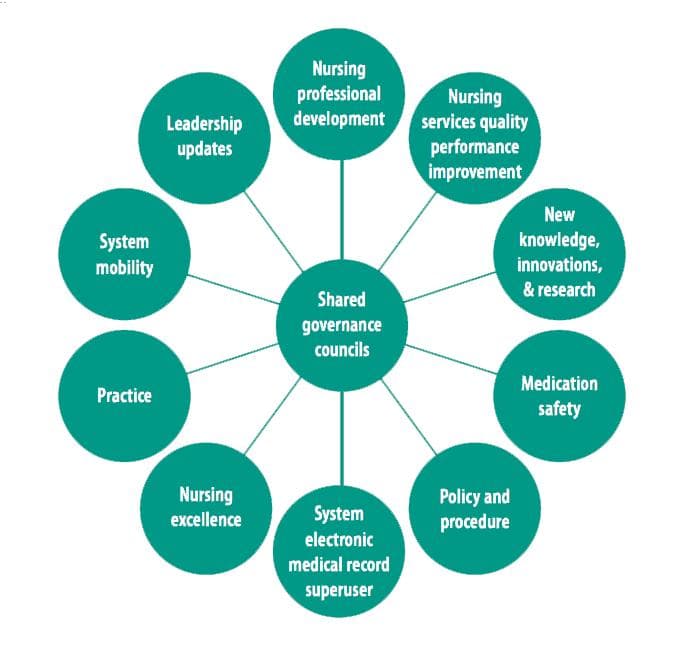
Many healthcare organizations say they have professional governance. Far fewer have professional governance that frontline nurses genuinely experience as meaningful. This distinction matters.
professional governance is not simply a collection of councils or committee meetings. At its best, professional governance creates professional ownership, nursing influence, leadership development, frontline engagement, operational collaboration, practice improvement, and cultural alignment.
When governance structures function well, nurses feel heard, empowered, and connected to organizational decisions. When they do not, councils become performative exercises with low participation and limited impact. The difference is rarely intention. The difference is structure.
Why professional governance efforts often struggle
Organizations frequently implement governance structures with strong enthusiasm but insufficient operational design. Common challenges include:
- Unclear council purpose
- Poor role definition
- Inconsistent participation
- Limited leadership support
- Meeting fatigue
- Weak communication loops
- Lack of visible outcomes
- Overly centralized decision-making
Over time, nurses begin viewing governance as extra work rather than meaningful professional influence. Engagement drops. Attendance decreases. Momentum fades.
professional governance must be operationalized — not symbolic
One of the most important truths about professional governance is this: nurses engage when they believe their participation leads to visible impact. Frontline staff quickly recognize whether councils influence real decisions, improve practice environments, shape workflow changes, affect patient care, and support professional growth.
If councils operate without visible outcomes, participation becomes transactional rather than meaningful.
Structural moves that increase engagement
Five structural shifts consistently move councils from performative to participatory.
1. Clarify the purpose of every council
One of the biggest engagement killers is ambiguity. Nurses should clearly understand why the council exists, what decisions it influences, how recommendations move forward, what authority members have, and how success is measured. Clear purpose improves ownership.
2. Reduce administrative friction
professional governance should not feel operationally exhausting. Organizations should simplify meeting preparation, documentation processes, communication workflows, decision tracking, and follow-up accountability. The easier participation feels, the more sustainable engagement becomes.
3. Create visible feedback loops
Frontline nurses need to see what changed, what decisions were made, which ideas moved forward, and what outcomes improved. Transparency strengthens trust. Without feedback loops, participation begins feeling performative.
4. Develop strong council leadership
Council chairs often receive little preparation despite leading highly influential professional structures. Organizations should intentionally develop council leaders through facilitation training, communication coaching, conflict management, leadership mentorship, and strategic planning support. Strong leadership creates stronger engagement.
5. Align governance with strategic priorities
professional governance should not operate separately from organizational strategy. High-functioning councils align work with quality goals, safety initiatives, workforce engagement, retention efforts, patient experience, and professional development priorities. Alignment increases organizational relevance.
Frontline participation requires psychological safety
Nurses participate more actively when they believe their voice matters, feedback is respected, leaders listen, concerns can be raised safely, and participation leads to change. Psychological safety is foundational to healthy governance cultures. Without it, councils become passive rather than collaborative.
professional governance is also a leadership pipeline
One of the most overlooked benefits of professional governance is leadership development. Councils create opportunities for nurses to develop communication skills, strategic thinking, collaboration abilities, project leadership, and change management experience. Organizations with strong governance structures often build stronger internal leadership pipelines over time.
Measuring governance effectiveness
Many organizations evaluate governance by attendance alone. But attendance is not the same as engagement. More meaningful indicators include:
- Participation quality
- Decision implementation rates
- Staff perception scores
- Practice improvements
- Council project outcomes
- Leadership development progression
- Interdisciplinary collaboration
Final thoughts
professional governance is not simply about creating committees. It is about building systems where nurses meaningfully influence professional practice, operational decisions, and organizational culture. That requires clear structure, leadership support, accountability, transparency, sustainability, and operational alignment.
When designed intentionally, professional governance becomes one of the most powerful drivers of nursing excellence, engagement, and retention within healthcare organizations.
How MagnetReady supports professional governance development
MagnetReady by CerTracker helps healthcare organizations strengthen professional governance through:
- Governance structure design
- Council optimization
- Leadership coaching
- Bylaw development
- Engagement strategies
- Accountability workflows
- Governance readiness assessments
Because nurses are most engaged when their voice leads to meaningful impact.